
Questions about buying, selling and living in Valley Ridge.
A crawlable answer library built around the questions that matter before a showing, offer or listing launch.
Official referencesCity of Calgary and government records used for local context2 references +
Census population, household, tenure, dwelling-form and construction-period context
Open official source ↗02Property ResearchThe City of Calgary · accessed 2026-08-26Address-level permits, land use and planning records
Open official source ↗Official records provide dated community context. Current listing status and conclusions about one property still require the applicable live record and property documents.
01What housing should I compare in Valley Ridge?
Single-detached house was the largest occupied-dwelling category in the 2021 Census profile at 92%. That historical mix is a starting point only; current listings must be separated by dwelling form, ownership, site, effective age, condition and parking.
02When were most Valley Ridge homes built?
The largest historical construction cohort was 1991 to 2000 at 53% of occupied private dwellings. Confirm the subject property's year, additions, permits and effective age independently.
03How should I choose comparables in Valley Ridge?
Match dwelling and ownership form, site, effective age, size, condition, parking and immediate setting. Then test nearby-community alternatives that the same buyer could purchase now.
04What documents should a Valley Ridge buyer review?
The exact list depends on the property, but commonly includes title and registered instruments, survey or real property report, permits, inspection material, insurance, warranties and condominium, association or builder documents where applicable.
05Are Valley Ridge school and commute claims guaranteed?
No. School designations, programs, transportation and space can change. Travel time varies by exact address, route, weather and time of day. Verify both with the current address-level tools.
06Are the statistics on this Valley Ridge site current market data?
No. The labelled Census figures use the 2021 reference year and describe historical community context. Current listing and monthly market data must show its own source, period and update status.
07Who leads the Valley Ridge real estate relationship?
Dusko Sremac is the primary agent, supported by Adam Collis as the featured REALTOR® and the broader Real Estate Partners by Real Broker team.
08What belongs in a useful Valley Ridge comparison set?
The right comparison separates effective age, condition, site and route exposure instead of treating every home in the community as interchangeable. Start by separating detached homes from varied build periods, attached choices where available, and renovated and original-condition properties, then adjust for the exact site, effective age, documentation and ownership structure. Row house: 80 occupied private dwellings (4%) in the 2021 Census profile.
09Which Valley Ridge details need address-level confirmation?
The working checklist includes current school designations, permit and renovation history, route, site and insurance context, and title and inspection details. These are prompts for the property review, not conclusions about every home in the community. Obtain property-specific insurance advice early enough to understand coverage, exclusions, deductibles and conditions before waiving an insurance condition.
10How should daily-life context affect a Valley Ridge purchase?
Use neighbourhood parks and local routes, everyday services and city connections, a range of commuting directions, and Community amenities confirmed for the address as a starting framework. Test the actual route, service, amenity or access relationship from the address at the time and season that matter to the household. Distinguish a feature inside the mapped community from one that is nearby, planned or accessible only from particular streets or phases.
11What factual baseline anchors this Valley Ridge answer library?
1,765 occupied private dwellings were reported as single-detached houses in the 2021 Census profile (92%); 80 row houses represented another 4%. Valley Ridge’s largest reported construction cohort was 1991 to 2000 with 1,015 occupied private dwellings (53%), followed by 2001 to 2010 with 620 (32%). The answer library uses that dated housing baseline to organize the next property question; it does not convert community evidence into a conclusion about the condition, title, current status or value of an individual address.
A fuller Valley Ridge foundation.
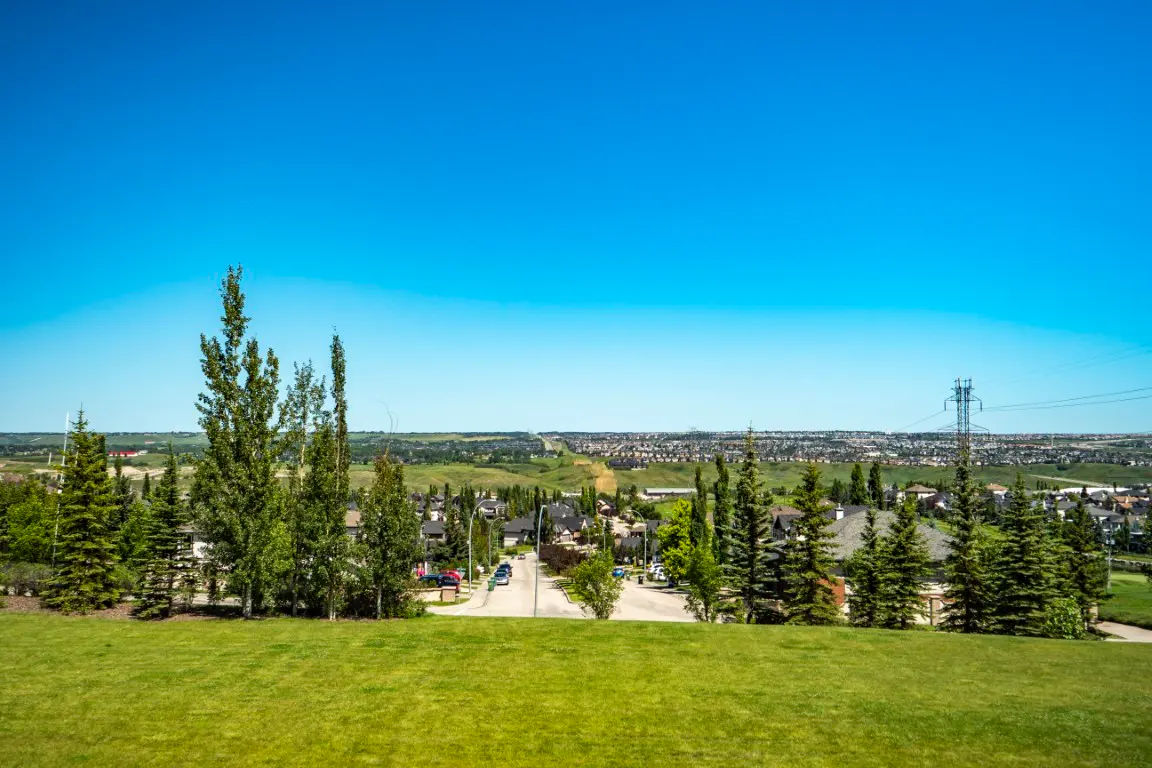
Valley Ridge is a west Calgary community with a strongly detached housing profile, varied terrain and a location at the city's western approach that makes site and access especially important. The official 2021 Census profile counted 5,365 people in private households and 1,915 private households within the exact community profile geography used for this site. Single-detached houses represented 92% of occupied private dwellings, row houses represented 4%, and the largest reported construction cohort was 1991 to 2000 at 53%. Those figures are dated context rather than current prices or evidence about an individual property. Buyers should compare grade, outlook, route and highway relationship, lot orientation, renovation history, remaining systems life and any property-specific golf-course or natural-edge conditions.
How to read this brief
Exact community-profile evidence is used for this guide. Historical Census context, current listing status and address-specific property evidence remain separate layers.
Historical community evidence, current listing status and address-specific property records remain separate layers throughout the guide.
See sources and methodology →Eight Valley Ridge answers that need a second evidence layer.
Valley Ridge is an established community where property age, renovation history, lot position and immediate surroundings can produce meaningful differences between nearby sales. This record turns the community file into route-specific work while keeping the subject property and current professional advice separate.
Open the answer library8 local records +
01Community identity
The profile counted 5,365 people in private households across 1,915 households, with an average household size of 2.8 people. For this answer library, use that evidence to answer the community-level part first and state what still depends on the address. Read it beside: Review the current title and applicable registered instruments, easements, caveats, liens, encumbrances and plans with qualified legal advice. Comparison checkpoint: Cougar Ridge. Compare a west Calgary hillside community with different construction eras, housing forms and amenity access. Current listing status still belongs to the approved live record.
02Housing baseline
1,765 occupied private dwellings were reported as single-detached houses in the 2021 Census profile (92%); 80 row houses represented another 4%. Applied to the answer library, the evidence helps separate housing form, effective age and ownership structure before generalizing. Read it beside: Confirm the listing is inside the intended Valley Ridge geography and note the exact street, parcel, dwelling and ownership form. Comparison checkpoint: Tuscany. Compare a larger northwest community with LRT access, broader housing supply and a different phase structure. Condition and legality still require the documents and review appropriate to the property.
03Mobility and daily context
1,220 residents aged five and older had moved within the prior five years (24%); that is household-mobility context rather than a proxy for real estate turnover. Within the answer library, its job is to name the current route, operator or access record needed to finish the answer. Read it beside: Resolve preventable maintenance, presentation and documentation gaps before photography and launch. Comparison checkpoint: Crestmont. Compare the adjoining west-edge community for newer construction, terrain and highway-access trade-offs. A lender or mortgage professional must decide how the actual property affects financing acceptance.
04Property review
Identify address-specific water, drainage, slope, noise, traffic, construction, fire, environmental or insurance questions relevant to the Valley Ridge property; do not generalize an exposure to every home. The answer library should use this record to identify the title, permit, document, inspection or professional review that resolves the issue. Read it beside: Compare a nearby established river-side market with more varied housing, redevelopment and lot patterns. Comparison checkpoint: Bowness. Compare a nearby established river-side market with more varied housing, redevelopment and lot patterns. Community context cannot establish value for the subject home.
05Buyer decision
Which Valley Ridge property form, ownership structure and completion stage fit the intended use and budget? Here, the practical use is to turn the evidence into a comparison question a buyer can use on a showing. Read it beside: Census population, household, tenure, dwelling-form and construction-period context. Publisher record: The City of Calgary. Comparison checkpoint: Cougar Ridge. Compare a west Calgary hillside community with different construction eras, housing forms and amenity access. A named source supports only the claim and geography recorded for it.
06Seller positioning
Lead with the real differentiators of the Valley Ridge property: site, effective age, documented improvements, layout, ownership structure and immediate setting. Carry this into the answer library to show which verified property fact a seller would need before making the claim publicly. Read it beside: 11% of occupied private dwellings were reported in the 2011 to 2015 construction cohort; the Census figure does not establish the age of a current listing. Comparison checkpoint: Tuscany. Compare a larger northwest community with LRT access, broader housing supply and a different phase structure. A comparison relationship does not make two properties or communities equivalent.
07Compare Crestmont
Compare the adjoining west-edge community for newer construction, terrain and highway-access trade-offs. For the answer library workflow, use it to explain the comparison logic without presenting two communities as interchangeable. Read it beside: Match the inspection and document plan to the subject property's actual construction, additions and effective age rather than the community's largest Census-era cohort. Comparison checkpoint: Crestmont. Compare the adjoining west-edge community for newer construction, terrain and highway-access trade-offs. Historical evidence must not be presented as current inventory or operating status.
082021 Census Community Profile: Valley Ridge
Census population, household, tenure, dwelling-form and construction-period context. Publisher record: The City of Calgary. The next step in the answer library is to cite the named record and keep its date and support boundary visible. Read it beside: 1,330 members of the employed labour force used driver – car, truck or van as their main commute mode (88%), while 720 reported the most common duration, 15 to 29 minutes (47%). Comparison checkpoint: Bowness. Compare a nearby established river-side market with more varied housing, redevelopment and lot patterns. The paired records define the next question; they do not settle the property conclusion.
The next useful layer of the Valley Ridge decision.
Each route has a separate job. Follow the evidence from community context to the specific property instead of repeating the same article under another keyword.
Condition guide
Go beyond the short answer with the archetype-specific decision file built for Valley Ridge.
Continue →02Audit the evidence
See which references support community, housing, market and migration statements—and the limits of each record.
Continue →03Use the complete guide library
Move from the short answer into the Valley Ridge housing, living, buyer, seller, market and property-type decision routes.
Continue →